

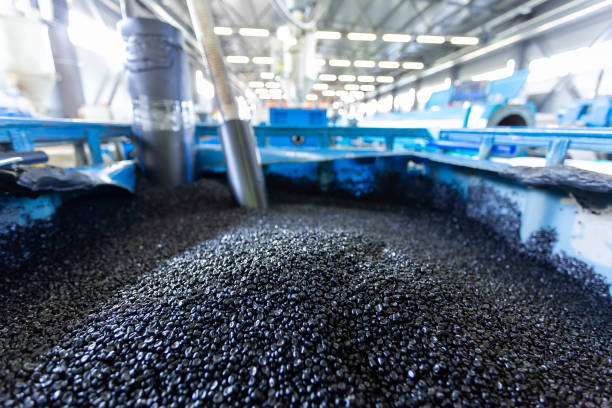
Industrial carbon innovation plays a critical role in creating and sustaining high-performance material cycles across global manufacturing sectors. As industries increasingly demand materials with superior performance, durability, and sustainability, carbon-based innovations — especially in engineered carbon forms like carbon black, are essential. By integrating advanced processes and sustainable feedstocks, these innovations help enhance product strength, lifecycle efficiency, and resource circularity. This transformation is not only technical but strategic, impacting polymers, rubber, coatings, plastics, and advanced composites. With global pressure to reduce environmental footprints and support circular material economies, industrial carbon innovation unlocks pathways toward resilient, high-performing material cycles that balance performance with ecological responsibility, making the next generation of materials more robust and future-ready.
The growth of a black carbon company sector has accelerated due to innovation in both production and application. Companies specializing in high-quality carbon black continue to develop solutions for automotive, electronics, and packaging industries, enabling longer-lasting and more efficient products.
The Black Carbon Landscape in Material Innovation
1) Role of Carbon Black in Modern Manufacturing
Carbon black, a finely divided form of carbon, acts as a reinforcing filler and functional additive across multiple sectors:
- In rubber products such as tires and industrial belts, carbon black enhances tensile strength, wear resistance, and durability.
- In plastics and coatings, it improves UV stability, mechanical performance, and color uniformity.
- As a pigment in inks, films, and paints, it ensures deep, consistent color and quality.
- Carbon black provides electrical conductivity and antistatic properties in electronics and polymer blends.
- Its versatility makes it essential in automotive, consumer goods, and industrial applications.
- Continuous innovations in particle design optimize carbon black performance for specialized applications.
2) Carbon Black Feedstock: Opportunities and Sustainability
Feedstock — the raw carbon source used to produce carbon black feedstock — is a key factor for both performance and environmental impact:
- Traditional feedstocks include heavy petroleum residues, hydrocarbon oils, or natural gas.
- These fossil-derived sources provide reliable structure and consistency for industrial needs.
- Emerging sustainable feedstocks include recycled hydrocarbons and bio-derived materials to reduce environmental impact.
- Recycling end-of-life tires or processed waste streams creates circular material loops.
- Advanced feedstock solutions minimize CO₂ emissions and improve life-cycle sustainability.
- Research continues to refine feedstock pathways to optimize both performance and ecological outcomes.
3) Advanced Processes Driving Carbon Innovation
Innovative manufacturing and post-treatment technologies are transforming the performance of carbon black:
- Post-treatment processes allow precise control of particle size, structure, and surface chemistry.
- These advancements create grades suitable for high-performance coatings, inks, and engineering plastics.
- Process control systems ensure consistent quality and efficiency across global production facilities.
- Pilot plants enable the development of specialty carbon black with tailored properties.
- R&D centers worldwide collaborate to explore new applications and process improvements.
- By optimizing production processes, carbon black becomes a high-value material rather than a commodity.
4) Integration With High-Performance Materials
Carbon black enhances not just individual materials but entire product systems:
- Engineered blacks improve traction, longevity, and durability in tires and rubber goods.
- Plastic composites with optimized carbon black exhibit better impact resistance and thermal stability.
- Conductive and antistatic plastics benefit from specialized carbon black grades.
- Coatings infused with carbon black achieve higher UV resistance and mechanical strength.
- Carbon reinforcement in polymer matrices supports lightweighting in automotive and industrial products.
- These material synergies enable products to meet demanding performance requirements efficiently.
5) Carbon Innovation and Sustainability Synergies
Sustainable innovation in carbon black now prioritizes circularity and environmental responsibility:
- Circular material cycles minimize waste while maximizing reuse of carbon resources.
- Recovered carbon from end-of-life products supports sustainable manufacturing.
- Lifecycle assessments guide production and design for lower environmental impacts.
- Sustainable carbon strategies help companies meet climate and net-zero goals.
- Energy-efficient processes reduce emissions throughout the carbon black value chain.
- Aligning performance with sustainability ensures industrial materials are future-ready.
6) Market Dynamics and Competitive Innovation
Innovation in industrial carbon markets combines technical excellence with strategic growth:
- Companies are expanding global manufacturing capabilities to meet rising demand.
- Diversified product portfolios allow access to multiple industries and applications.
- Collaboration with industrial partners accelerates co-development of next-generation materials.
- Specialty carbon black grades serve electronics, coatings, and advanced composites.
- International R&D networks support knowledge sharing and innovation across regions.
- Strategic innovation ensures solutions remain relevant in competitive high-performance markets.
7) Carbon Fiber Plastic and High-Performance Applications
Beyond carbon black, industrial carbon innovation extends to carbon fiber plastic applications:
- Carbon fiber plastics provide high strength-to-weight ratios for automotive and aerospace sectors.
- These plastics reduce weight while maintaining durability, improving fuel efficiency in vehicles.
- The synergy between carbon black and carbon fiber plastics in composites enhances mechanical and thermal performance.
- Lightweight carbon fiber plastics are ideal for structural and engineering components.
- Innovations in fiber and matrix integration increase recyclability and material circularity.
- Industrial adoption of carbon fiber plastics accelerates high-performance, sustainable product cycles.
8) Future Trends and Technological Innovation
Industrial carbon innovation continues to evolve with emerging technologies and market trends:
- Artificial intelligence and machine learning are optimizing carbon black production and quality control.
- Advanced simulation models predict material behavior and performance in diverse industrial applications.
- Nanotechnology enables the development of ultra-fine carbon particles for high-end electronics and coatings.
- Additive manufacturing and 3D printing are incorporating carbon-based materials to enhance strength and reduce weight.
- Circular economy principles guide the design of new carbon materials to maximize recyclability and minimize waste.
- Ongoing research ensures that future industrial carbon solutions remain high-performing, sustainable, and adaptable to changing global demands.
Conclusion
Industrial carbon innovation is transforming global material cycles by combining advanced manufacturing techniques, innovative research, and sustainable practices to create products that are stronger, more durable, and environmentally responsible. Birla Carbon, a global leader in carbon solutions, offers a wide range of services to support industries worldwide, including high-quality carbon black production, technical support, application development, and customized solutions for polymers, rubber, coatings, and composites. They help manufacturers improve product performance, optimize material usage, and achieve sustainability goals through innovative solutions. With a focus on research and development, quality assurance, and environmental stewardship, they empower industries to enhance efficiency and durability while reducing environmental impact. By integrating these services with global supply capabilities, they enable industrial growth that is both high-performing and responsible. As industries continue to adopt advanced carbon materials, they ensure that the next generation of industrial products achieves resilience, efficiency, and sustainability.
